

If you have ever shopped for furniture online, you have probably noticed that "wood" can mean a lot of different things. "Solid wood," "real wood," "engineered wood," "wood veneer," "manufactured wood." These terms get thrown around loosely, and it can be hard to tell what you are actually buying.
The difference matters. It affects how your furniture looks, how long it lasts, how it can be repaired, and whether you will still want it in twenty years. As a shop that builds exclusively with solid wood, we have a clear perspective on this. But we will give you the honest comparison so you can decide for yourself.
What Is Solid Wood Furniture?
Solid wood furniture is built from planks of real, whole lumber cut from a tree. The wood is milled, dried, planed, and joined together using traditional woodworking techniques: mortise and tenon joints, dovetails, dowels, or other mechanical connections that rely on the strength of the wood itself.
When you look at a solid wood table, what you see on the surface is the same material all the way through. The grain pattern, color, and texture are not a coating or a layer. They are the wood. If you flip the table over, you see more wood. If you sand the surface, you find more wood underneath.
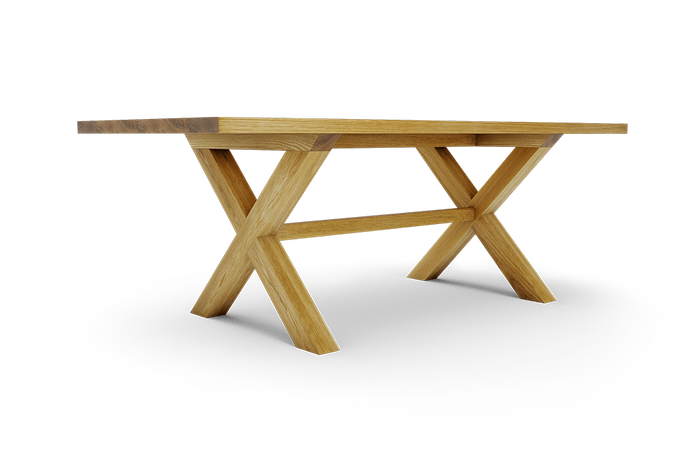
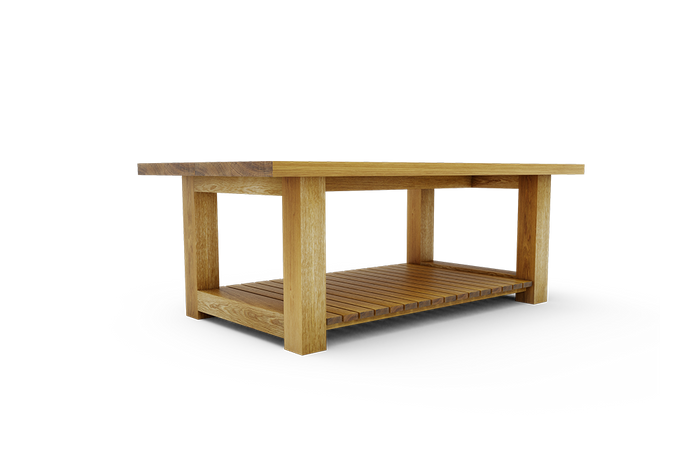
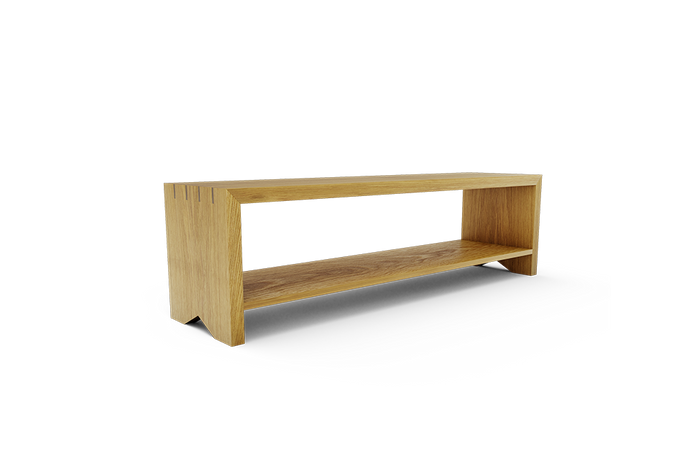
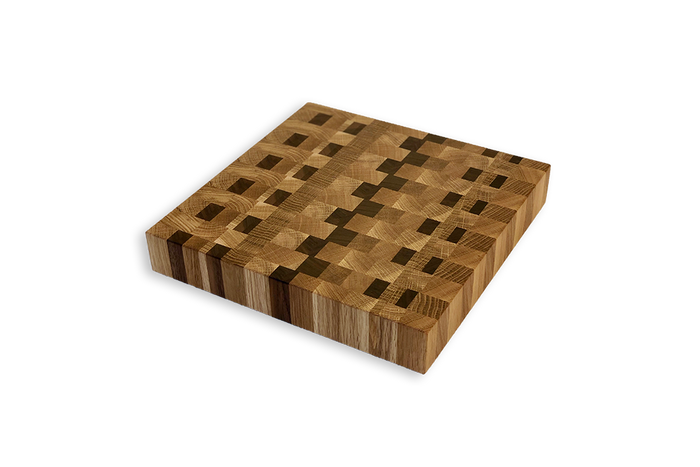
Every piece we build at Rooted Furniture is solid wood. You can see examples of our work in our portfolio and across our dining table and coffee table collections.
What Is Engineered Wood?
"Engineered wood" is an umbrella term that covers several different materials. None of them are solid lumber. Here is what you are likely to encounter:
Plywood
Plywood is made from thin layers (plies) of real wood veneer glued together with the grain of each layer running in alternating directions. This cross-grain construction makes plywood strong and resistant to warping. It is the highest-quality engineered wood product and is commonly used in cabinetry and some furniture applications. However, it is not the same as solid hardwood. The visible surface is a thin veneer, and the edges must be covered or banded.
MDF (Medium-Density Fiberboard)
MDF is made from wood fibers mixed with resin and pressed into flat sheets under high heat and pressure. It has no grain, no natural color variation, and no structural character. It is smooth, uniform, and inexpensive. MDF is almost always painted or covered with a veneer or laminate. It is commonly used in budget furniture, shelving, and cabinetry.
Particleboard
Particleboard is the lowest tier of engineered wood. It is made from wood chips, shavings, and sawdust bonded together with adhesive and pressed into sheets. It is lighter and weaker than MDF and is prone to sagging, swelling, and damage from moisture. Most flat-pack furniture from big-box retailers is built with particleboard.
Wood Veneer
Veneer is a thin slice of real wood (typically 1/42 of an inch thick) glued onto a substrate of plywood, MDF, or particleboard. The surface looks like real wood because it is real wood, but it is only a fraction of a millimeter thick. Once it chips, peels, or wears through, there is nothing underneath it but the substrate material.
Durability and Lifespan
This is where the gap between solid wood and engineered wood becomes most obvious. A well-built solid wood dining table will last for generations. We are not using that word loosely. We build tables that your grandchildren will eat dinner on. Solid wood can be sanded, refinished, repaired, and restored repeatedly over its lifespan.
Engineered wood furniture has a much shorter useful life. MDF and particleboard cannot be meaningfully repaired once damaged. They swell when exposed to moisture, and fasteners loosen over time because the material does not have the fiber structure to hold screws the way solid wood does. Veneer can only be sanded once or twice before you break through to the substrate.
Most engineered wood furniture, especially in the budget and mid-range market, lasts five to fifteen years. That is not inherently bad for the price point, but it is important to understand when comparing costs.
Repairability
Solid wood is almost always repairable. Scratches can be sanded out. Dents can often be steamed. Joints can be re-glued. Surfaces can be refinished from bare wood. If a solid wood table gets damaged, we can fix it. If it gets refinished in twenty years because the style has changed, it comes out looking brand new.
Engineered wood is a different story. A deep scratch on veneer exposes the substrate and cannot be sanded out without removing the veneer entirely. A water ring on MDF swells the fibers permanently. A broken particleboard joint usually means the piece is done.
Aesthetics
Solid wood has a depth and warmth that engineered products cannot replicate. The grain pattern runs through the full thickness of the piece, which means light interacts with it differently at different angles. There are natural color variations, mineral streaks, and subtle textures that you can feel under your fingertips.
Engineered wood with veneer can look similar on the surface, especially in photographs. But in person, the difference is apparent. The thinness of the veneer creates a flatter, less dimensional look. And because the surface is so thin, it cannot develop the same patina that solid wood builds over years of use.
Weight and Construction
Solid wood furniture is heavy. A solid walnut dining table might weigh 150 to 200 pounds. That weight is a sign of real material and honest construction. You feel the difference the moment you put your hands on it.
Engineered wood furniture is generally lighter, which makes it easier to ship and move. That is a genuine advantage in some contexts, like apartment living with frequent moves. But lightness often comes with flimsier construction: cam lock fasteners instead of wood joinery, stapled connections instead of glue-ups, hollow components instead of solid sections.
Environmental Impact
This one is more nuanced than people expect. Engineered wood products use wood more efficiently on a per-tree basis. A single log can produce much more MDF or plywood than it can solid lumber. From a raw material standpoint, engineered wood stretches the resource further.
However, solid wood furniture lasts dramatically longer. When you factor in the lifecycle, a single solid wood table that lasts 80 years is more environmentally sound than five particleboard tables that each last 10 years. The adhesives and resins used in engineered wood also introduce chemicals that solid wood does not require.
We use a plant-based finish that contains no synthetic chemicals, keeping the environmental footprint of our furniture as small as possible.
Long-Term Value
Solid wood furniture costs more upfront. That is undeniable. But when you calculate cost over the lifespan of the piece, the math changes. A solid wood dining table that lasts 50 or more years and can be refinished multiple times costs less per year of use than a mid-range engineered wood table that lasts 10 years and ends up in a landfill.
There is also the intangible value. A handmade solid wood table becomes a family heirloom. It holds memories. It has a story. That is not something you can put a price on, but it matters to the people who live with it every day.
Frequently Asked Questions
Is all engineered wood bad?
No. High-quality plywood is a genuinely useful material, especially for cabinetry and interior panels. The issue is when engineered wood is used in place of solid wood for furniture that is meant to last, or when marketing language obscures what the product actually is.
How can I tell if furniture is solid wood?
Look at the edges and undersides. Solid wood shows continuous grain. Veneer will have a visible seam where the thin layer meets the edge banding. If the product listing says "wood" without the word "solid," it is probably engineered. Also, solid wood furniture is noticeably heavier.
Does solid wood furniture warp?
Properly kiln-dried and well-constructed solid wood furniture is very resistant to warping. Wood movement (slight expansion and contraction with humidity changes) is normal and expected. Good furniture makers design for it. Problems arise when wood is improperly dried or when construction does not account for seasonal movement.
Why is solid wood furniture so much more expensive?
The materials cost more (solid hardwood lumber vs. processed sheet goods), the construction takes longer (hand-cut joinery vs. machine-assembled fasteners), and the skill required is greater. You are paying for quality, durability, and craftsmanship that will outlast you.
If you are ready to invest in furniture that will last, learn more about our process or start a commission today.